Circadian Rhythm

There is a persistent assumption that sleep begins when the eyes close. This assumption, comfortable and intuitive, happens to be inaccurate. The process of sleep onset begins earlier — in the quality of the light a person sits under at eight in the evening, in the temperature of the room an hour before they intend to lie down, in the final thing their attention rests on before the lamp is switched off. The wind-down period is not a precondition of sleep. It is, in the strictest sense, part of it.
What follows is a survey of the components that published sleep research has returned to, consistently, when describing the conditions under which sleep onset is easiest and sleep quality is highest. The aim is not to prescribe a particular sequence — the literature does not support a single universal protocol — but to make the constituent parts visible so that a thoughtful person can arrange them according to their own circumstances.
The body's circadian system registers light through specialised photoreceptors in the retina. These receptors are particularly sensitive to blue-spectrum wavelengths, the same wavelengths emitted in abundance by the LED panels of phones, laptops, and most contemporary ceiling lights. When these wavelengths reach the retina in the evening, the circadian system interprets them as a signal that the day is continuing — that the alert phase is still in progress.
The practical consequence of this is well-documented: exposure to bright, blue-heavy light in the two hours before a person intends to sleep delays the onset of drowsiness. The circadian signal that would otherwise accumulate into a persuasive case for rest is interrupted. The person finds themselves lying in the dark, alert, without a clear account of why.
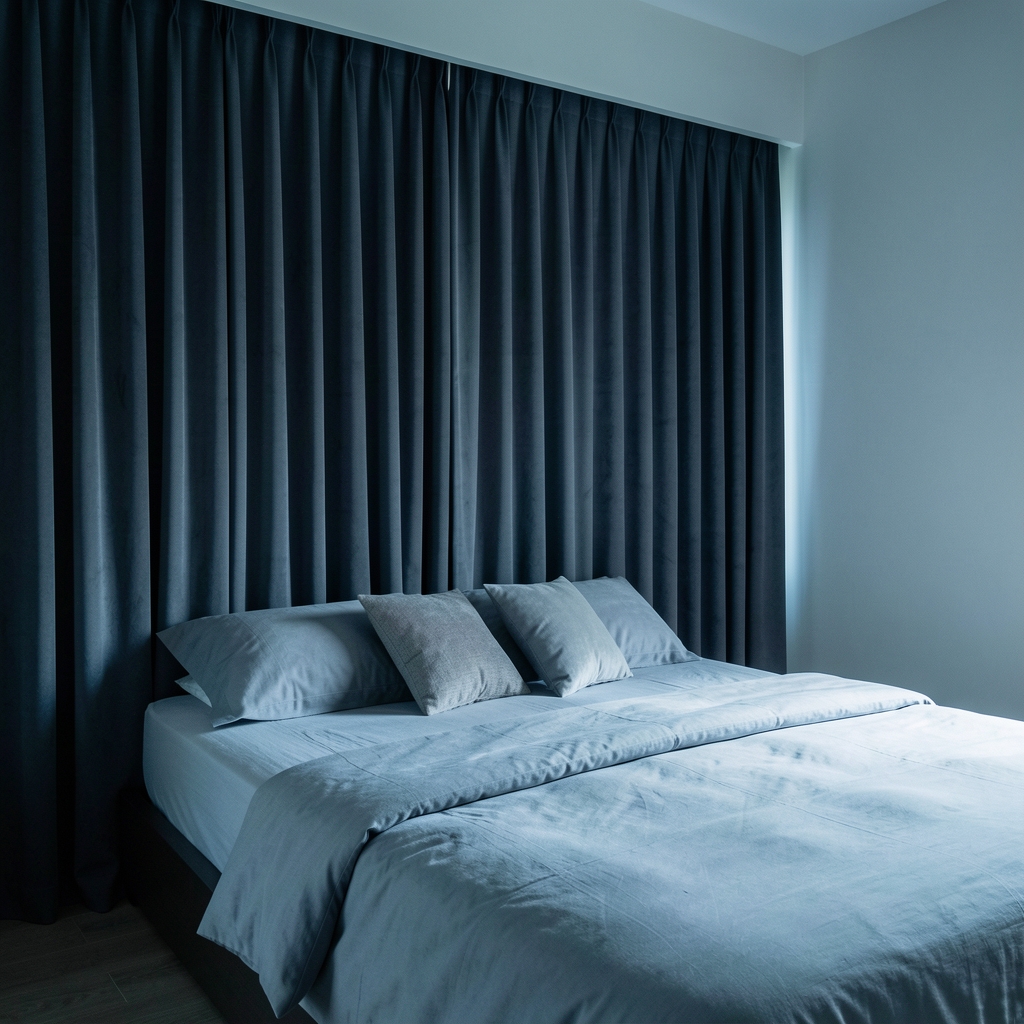
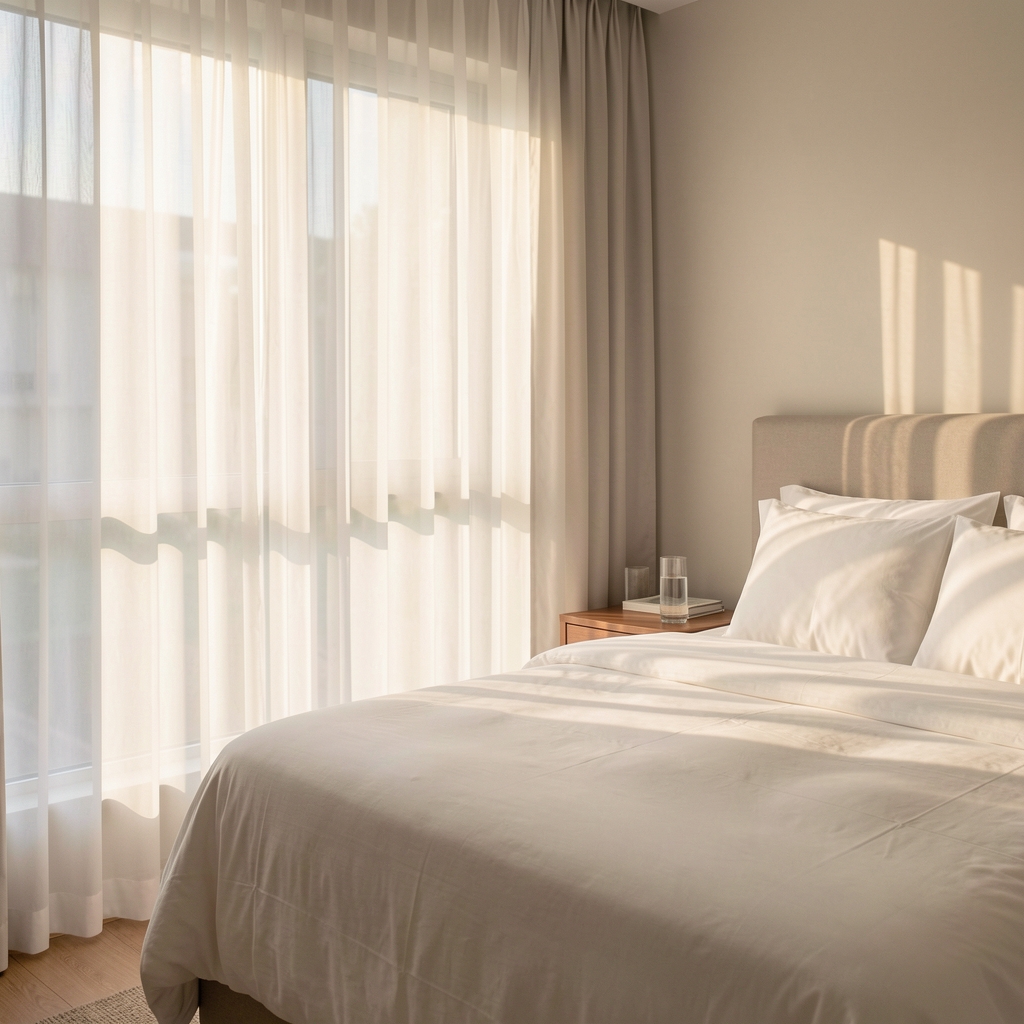
The counter-intervention is correspondingly simple, if not always convenient. Reducing the brightness of overhead lights and shifting toward warmer-spectrum sources — lamps rather than ceiling fixtures, lower wattage, amber rather than cool-white — in the ninety minutes before bed has a measurable effect on the ease of sleep onset. Screens can be dimmed, and the remaining time before bed reorganised around lower-stimulation activities: reading a physical book, writing in a journal, or sitting with a conversation rather than a broadcast.
None of this requires particular equipment or expense. The key intervention is dimming, and the primary cost is the willingness to let the evening become quieter before it ends.
Body temperature follows its own circadian arc, independent of deliberate action. Core temperature rises through the afternoon, peaks in the early evening, and then falls in a decline that coincides with the onset of sleepiness. The fall in core temperature is not merely correlated with sleep — it is, according to considerable published research, causally involved in it. A cooler environment supports this decline; a warm environment resists it.
This is why the experience of trying to sleep in an overheated room so reliably produces restlessness. The body is working to shed heat in order to fall asleep, and the environment is working against it. Published findings tend to cluster around 16–19°C as the range most consistently associated with good sleep onset and minimal overnight waking, though individual variation exists.
The practical implication is that the bedroom should be cooler than the rest of the dwelling — and cooler than most people's instinct suggests. Opening a window, adjusting the central heating timer, or using lighter bedding in warmer months are interventions of minimal complexity. What they share is a recognition that the body's thermal work in the lead-up to sleep is real work, and that the environment can either assist it or obstruct it.
The cooler bedroom is not an austerity measure. It is a form of preparation — the room arranged in advance for what the body will need to do.
A less-discussed element of the wind-down period is the timing of stimulation more broadly — not only light and temperature, but the cognitive and emotional character of the activities that fill the hour or two before bed. A late phone call involving a complex negotiation, a documentary about conflict or catastrophe, a heated exchange on social media: these are not neutral in their effect on the ease of sleep onset.
The arousal system does not have a rapid off-switch. Emotional or cognitive activation in the evening persists into the night — it continues to occupy attentional resources even after the activity that prompted it has ended. Several studies on what is sometimes called "cognitive pre-sleep arousal" suggest that the content of pre-sleep thought, rather than the mere fact of wakefulness, accounts for a significant portion of the difficulty people report in falling asleep.
This is not an argument for passivity or a featureless evening. It is an argument for the timing and sequencing of stimulation. Work that requires deep concentration, conversations that involve unresolved tension, or media that produces sustained emotional engagement — these are better placed earlier in the evening, when there is time for the arousal they produce to diminish before the sleep window opens.
Most protocols for improving sleep quality include some version of a buffer period between the last active engagement of the evening and the moment of lying down to sleep. The logic is intuitive: the transition from activity to rest is not instantaneous, and the body and mind need time to make it. The duration most commonly cited in the literature is thirty to sixty minutes, but the quality of the interval matters as much as its length.
A period of stillness does not mean an absence of activity. It means activity that does not compete with the gradually gathering impulse toward sleep. Reading a novel — particularly one that is absorbing but not urgent — is a good example. The attention is occupied, but not in a way that generates anxiety, requires resolution, or produces the open-loop cognitive activity that makes falling asleep difficult. Gentle stretching, a short walk, a period of slow breathing: these share the same property.
What this interval is not is a period of managing notifications, reviewing outstanding tasks, or rehearsing tomorrow's schedule. These activities are not harmful in themselves, but they are poorly timed. They reactivate the planning and problem-solving processes that are most active during the waking day, at exactly the moment when those processes are best allowed to quiet.
All of the above — light management, thermal preparation, stimulation timing, the interval of stillness — operate within a larger condition that the sleep literature returns to with more consistency than any single intervention: the regularity of the sleep schedule itself.
The circadian system is, among other things, a clock. It anticipates. When a person rises and retires at consistent times across the week, the system builds a profile of that pattern and begins to prepare for it in advance. Drowsiness arrives at roughly the expected hour. The body begins its thermal descent at a predictable point. The transition into and out of sleep becomes easier because it is expected.
The reverse is also true. Inconsistent sleep and wake times — common across weekday and weekend, particularly when the weekend involves sleeping two or three hours later than usual — disrupt this anticipatory calibration. The system cannot build its profile when the inputs keep changing. The result, familiar to many people, is difficulty falling asleep on Sunday night after a weekend of late rising: the circadian clock has shifted, and Monday morning asks it to shift back before it is ready.
This is not an argument for a life without variation. It is an observation that the wind-down period, however carefully arranged, operates on a foundation that is built over weeks and months of habitual timing. The evening ritual supports the circadian rhythm; it does not substitute for it.
The components of a well-considered wind-down sequence, arranged in approximate order of the evening:
The common thread running through each of these is not complexity but timing. The wind-down is not a collection of special techniques. It is ordinary life, arranged in the right order.

Eleanor Whitfield is the lead editor at Oslamin Notebook. Her editorial work focuses on the observation and documentation of everyday wellness practices, drawn from published sleep research and firsthand notes gathered over several years.
More from this author →