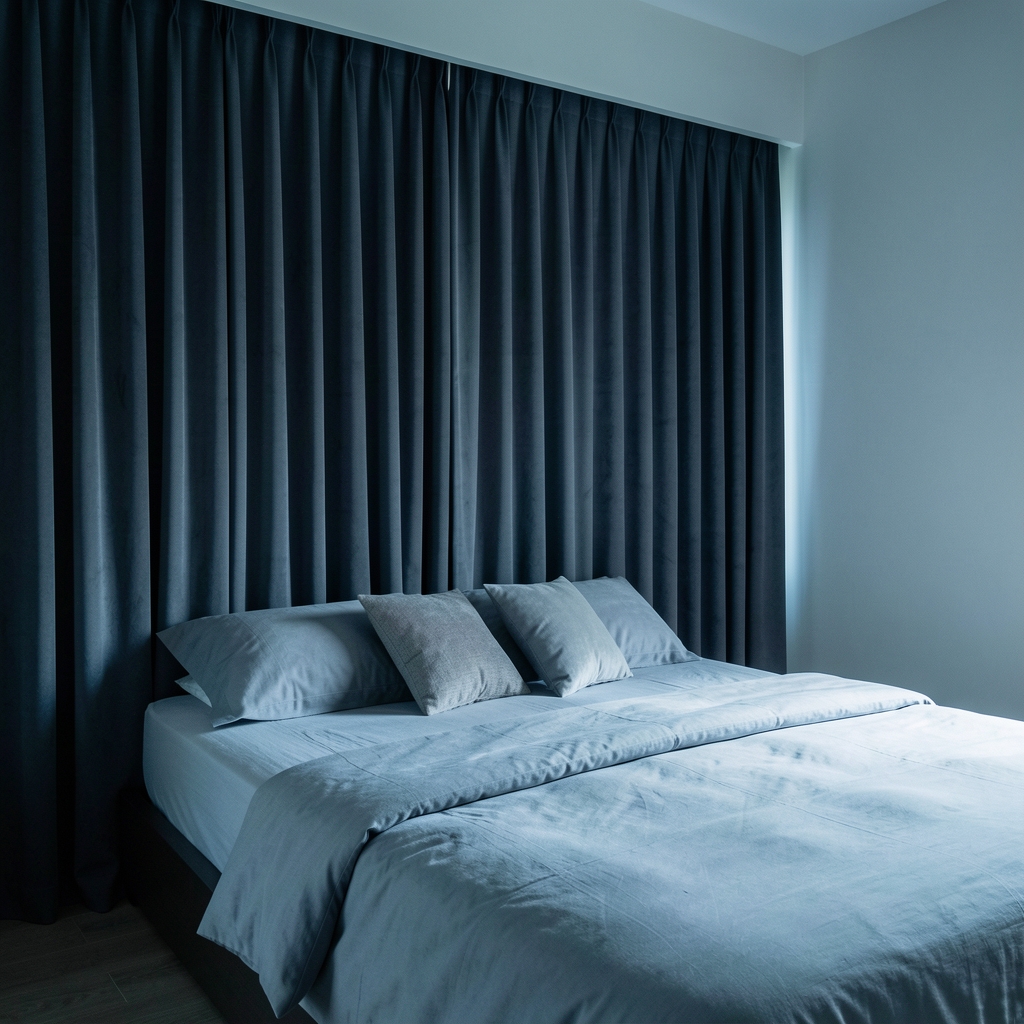
Sleep Hygiene

The body is a clock, among other things. It keeps time by means of a distributed system of oscillating cells — in the brain, in the organs, in virtually every tissue — that run on a cycle of roughly twenty-four hours. This internal clock is not metaphorical. It is a mechanism, and like any mechanism it is subject to calibration. The primary inputs by which the circadian system sets itself each day are light and darkness. Everything else is secondary.
This piece examines how that calibration works, what disrupts it, and why the consistency of a sleep schedule is less a matter of discipline than of physiology. Understanding the mechanism does not change the mechanism, but it does change the quality of the decisions made around it.
The master regulator of the circadian system sits in a region of the brain called the suprachiasmatic nucleus. It receives direct input from the retina — specifically from a subset of light-sensitive cells that are particularly responsive to short-wavelength blue light. When these cells detect light, they relay that information to the clock, which uses it to determine where in the twenty-four-hour cycle the current moment falls.
This is how the circadian system anchors itself to the external world. In the absence of light cues, the internal clock runs slightly long — closer to 24.2 hours than to exactly 24 — which means it would gradually drift out of alignment with the solar day. Light prevents this drift by acting as a resetting signal each morning. The day's first exposure to bright light shifts the clock slightly earlier, re-anchoring it to dawn.
The implications of this mechanism are straightforward once its logic is clear. The circadian clock is not passive. It actively interprets the light environment and adjusts accordingly. A person who wakes to bright morning light on a consistent schedule is, in effect, providing their clock with a reliable daily calibration. A person who wakes at irregular times, in varying degrees of darkness, is providing their clock with ambiguous data.
Bright light in the morning is among the most consistently cited interventions in the sleep research literature — not as an aid to falling asleep, but as a structural support for the entire circadian day. Morning light exposure advances the phase of the circadian clock, pulling it earlier. When the clock is phase-advanced, the onset of evening drowsiness arrives at a predictable and reasonable hour, sleep onset is easier, and morning waking feels more natural rather than effortful.
The intensity required for this effect is substantially higher than typical indoor lighting. Outdoor daylight, even on an overcast day, typically delivers between 1,000 and 10,000 lux. A well-lit indoor room might deliver 300 lux. The difference matters because the photoreceptors responsible for circadian signalling are relatively insensitive — they need a significant input to generate a meaningful phase shift.
This is not an argument that every person must step outside at dawn. It is an observation that the habit of spending time outdoors in the morning hours — even ten to twenty minutes, even in grey weather — has a physiological basis that goes beyond the commonly cited benefits of fresh air and mild exercise. The light itself is doing work.
Morning light is not a pleasant extra. It is the signal by which the internal clock sets itself for the day ahead.
If morning light advances the clock, evening darkness protects it. The circadian system expects that as the day progresses, light levels will fall. As they fall, a signal is generated that the day is ending. The system begins preparing for sleep: core temperature starts its decline, and the physiological conditions for sleep onset begin to assemble.
The difficulty, in the contemporary environment, is that evening light levels rarely fall in a way that reflects the actual time. A living room at nine in the evening, lit by overhead fixtures and several screens, may be delivering several hundred lux of cool-spectrum light to the eyes. The circadian system, receiving this input, does not conclude that the day is ending. It concludes that the day is continuing.
The consequence is familiar: a person who goes to bed at eleven and lies awake for forty-five minutes, having spent the previous two hours in a brightly lit room staring at a screen, has essentially told their circadian clock that it is still afternoon. The clock believed them. Sleep onset is difficult not because anything is wrong, but because the system is operating exactly as it was designed to — interpreting the available light signal and responding accordingly.
The most consistent finding across the literature on sleep quality is not about any particular intervention — not about the colour temperature of bedroom lighting, or the use of white noise, or the specific contents of a wind-down ritual. It is about the regularity of the sleep schedule: the consistency of the time at which a person goes to bed, and particularly the time at which they wake.
The wake time matters more than the sleep time because it is the anchor. It is the moment each day at which the circadian clock receives its calibration signal — the bright morning light, the first meal, the first social interaction. When the wake time is consistent, these calibration signals arrive at consistent intervals, and the clock remains well-anchored. When the wake time varies, the calibration signals arrive at irregular intervals, and the clock drifts.
Social jetlag is the term sometimes used to describe the circadian disruption produced by a consistently irregular schedule — specifically the pattern of sleeping late at weekends and waking early on weekdays. Even a two-hour discrepancy between weekend and weekday wake times produces a measurable effect on circadian alignment, sleep onset difficulty on Sunday nights, and daytime alertness across the following week. The body does not distinguish between jetlag caused by crossing time zones and jetlag caused by staying up late on a Saturday.
A consistent sleep schedule does not require a rigid or early bedtime. It requires that the wake time remain stable across the full week. A person who consistently wakes at eight in the morning — including weekends — and goes to bed when they feel genuinely sleepy is likely to maintain reasonable circadian alignment, even if their bedtime varies by thirty to forty-five minutes.
What disrupts alignment most severely is not a late night occasionally, but a pattern of large swings in wake time across the week. The circadian system is adaptive over days and weeks; a single disruption is absorbed. It is the repeated, large-amplitude variation in timing that the system cannot reconcile.
When re-establishing a disrupted schedule, the most efficient approach — according to the evidence — is to fix the wake time first, and allow the sleep time to follow. Attempting to fall asleep earlier before the circadian clock has been advanced is likely to produce extended wakefulness. Waking at a consistent early time, over several days, shifts the clock toward earlier drowsiness in the evening. The schedule adjusts from the morning anchor backward, rather than from the evening endpoint forward.
The practical value of understanding the circadian light mechanism is that it transforms light from a background condition into a usable variable. Bright morning light is an input that advances the clock. Blue-spectrum light in the evening is an input that delays it. Darkness in the evening is an input that protects the clock's evening calibration. A person who understands these relationships can make decisions about their light environment that support rather than undermine their sleep schedule.
This does not require purchasing specialised equipment or restructuring the household. It requires, primarily, a willingness to treat the evening light environment as something worth managing — to dim the lights an hour before bed, to step outside in the morning, and to consider that the body's timekeeping system is reading the environment continuously and adjusting its outputs accordingly.
The clock is always running. The question is only whether the inputs it receives are helping it keep accurate time.

Eleanor Whitfield is the lead editor at Oslamin Notebook. Her editorial work focuses on the observation and documentation of everyday wellness practices, drawn from published sleep research and firsthand notes gathered over several years.
More from this author →